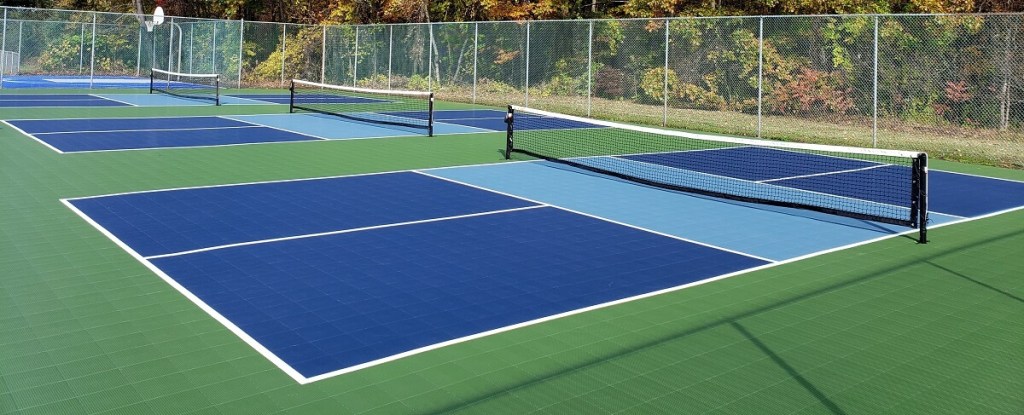
You don’t really notice a good pickleball court at first. That’s kind of the point. When the surface is right, the game flows, your feet trust the ground, and the sound of the paddle meeting the ball feels clean instead of hollow or harsh. It’s only when something’s off—a slippery patch, a dead bounce, a sore knee the next morning—that you realise how much the floor beneath you matters.
As pickleball keeps growing beyond parks and retirement communities into schools, clubs, and backyard builds, more people are asking thoughtful questions about surfaces. Not the flashy stuff, but the practical, lived-in details. What holds up over time? What feels good to play on? What won’t become a regret after one harsh summer or a rainy season?
More Than Paint on Concrete
It’s tempting to think a court is just a slab with some lines. That assumption usually fades after a few games. A proper pickleball court flooring setup affects everything from player safety to how long the court stays playable without constant fixes.
Concrete and asphalt are still common bases, especially outdoors, but the real story starts on top of them. Surface layers are designed to manage grip, cushion impact, and handle weather stress. A slightly textured finish can prevent slips without stealing speed from the ball. A bit of flex can take the edge off repetitive footwork, which matters more than people think—especially for regular players.
Indoor courts tell a different story. Gyms and multipurpose halls often adapt existing floors, but not all surfaces translate well to pickleball. Too smooth and it’s risky. Too soft and the ball response gets unpredictable. The balance is subtle, and it’s usually learned through use, not brochures.
The Feel Under Your Feet
Ask ten players what makes a court “good” and you’ll get ten slightly different answers. Some talk about bounce consistency. Others mention joint comfort. A few will say it just feels right.
That feeling usually comes from the pickleball court material chosen for the surface layer. Acrylic systems, modular tiles, and cushioned coatings each create a different playing experience. Acrylic coatings, for example, are popular outdoors because they’re durable, colour-stable, and relatively easy to maintain. Modular tiles snap together and allow drainage, which can be a lifesaver in wet climates, though some players find the bounce a touch livelier.
There’s no universal best option—just better or worse choices depending on how and where the court will be used. A community centre with heavy daily play has different needs than a private backyard court used on weekends.
Weather, Wear, and Real Life
One thing that doesn’t get talked about enough is how courts age. Sun fades colour. Freeze–thaw cycles create hairline cracks. Even fallen leaves can stain or affect traction if they’re left too long.
Outdoor surfaces need to breathe and move a little without failing. Indoor ones need to resist scuffing and moisture from shoes brought in on rainy days. Maintenance matters, but smart material choices can reduce how often you’ll need to think about it at all.
This is where long-term thinking beats short-term savings. Cheaper systems can look fine in year one and become patchy or unsafe by year three. Better surfaces tend to age quietly, without drama, which is exactly what most players want.
Why Players Talk About Bounce So Much
Bounce consistency is the unglamorous heart of the game. If the ball reacts differently in different spots, rallies break down and frustration creeps in. Good pickleball flooring manages micro-variations—tiny surface changes you might not see but absolutely feel during play.
That’s why proper installation matters just as much as materials. Even the best surface can disappoint if the base isn’t level or if coatings are applied unevenly. It’s also why many experienced players can tell within five minutes whether a court was built thoughtfully or rushed.
Indoor vs Outdoor: Same Game, Different Needs
Indoor pickleball often shares space with basketball, badminton, or volleyball. The surface has to work for everyone, which means compromise. Outdoor courts, on the other hand, can be purpose-built, but they’re exposed to everything nature throws at them.
Lighting, drainage, temperature swings, and surrounding trees all influence surface choice. A court in a dry, sunny region might thrive with one system, while the same setup could struggle somewhere humid or cold. Context matters more than marketing claims.
The Human Side of Court Design
What gets overlooked in technical discussions is how personal this all becomes. For some players, pickleball is social—a reason to move, laugh, and connect. For others, it’s competitive, fast, and demanding. The surface should support both without drawing attention to itself.
A well-chosen court doesn’t announce its quality. It simply lets the game happen. Players leave tired but satisfied, not sore or annoyed. That’s when you know the choices behind the scenes were made with care.
Ending Where the Game Begins
At the end of the day, the best pickleball courts aren’t defined by specs alone. They’re defined by how they’re used—by the morning regulars, the weekend beginners, the kids learning to keep score, and the retirees who play three times a week because it makes them feel good.
If you’re planning or upgrading a court, slow down a little. Ask how it will be played on, not just how it will look on day one. The right surface doesn’t shout for attention. It earns trust, rally by rally, season after season.
 Site Title